What Commercial Lawn Maintenance Actually Includes
If you’re managing a commercial property, HOA, or business campus, you’ve probably spent time trying to figure out what should be included in a professional lawn maintenance contract. You’ve likely seen proposals that vary wildly in scope and price, and you’re not sure what’s standard.
At Delk Management, we’ve been providing commercial lawn maintenance across Eastern Washington since 2011. The scope of commercial grounds work is fundamentally different from residential service. Here’s what professional commercial lawn maintenance actually includes and why it matters for your property.
Commercial vs. Residential Lawn Care: Why the Scope Is Completely Different
Commercial lawn maintenance operates at a different scale with different expectations. Residential lawn care focuses on one property with flexible scheduling. Commercial grounds maintenance covers multiple acres, requires consistent appearance standards, and operates on strict schedules to avoid disrupting business operations or tenant access.
Liability exposure is higher. Commercial properties have more foot traffic, which means greater risk of injury from equipment, chemicals, or uneven surfaces. Professional commercial lawn service includes proper insurance, safety protocols, and documentation that residential providers often skip.
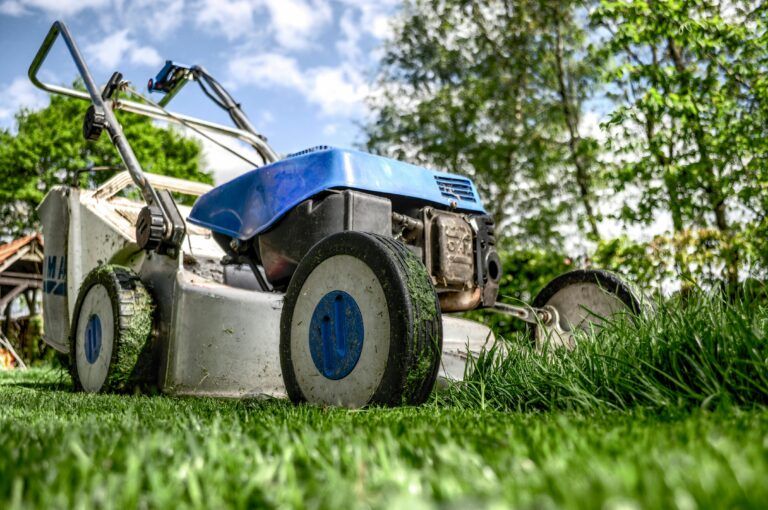
Equipment is industrial-grade. Commercial mowing services use wide-deck mowers, high-capacity spreaders, and commercial-grade sprayers that cover ground faster and handle heavier use. Crew size is larger to complete work efficiently within tight windows.
What’s Always Included in a Commercial Lawn Maintenance Contract
A standard commercial grounds maintenance contract includes:
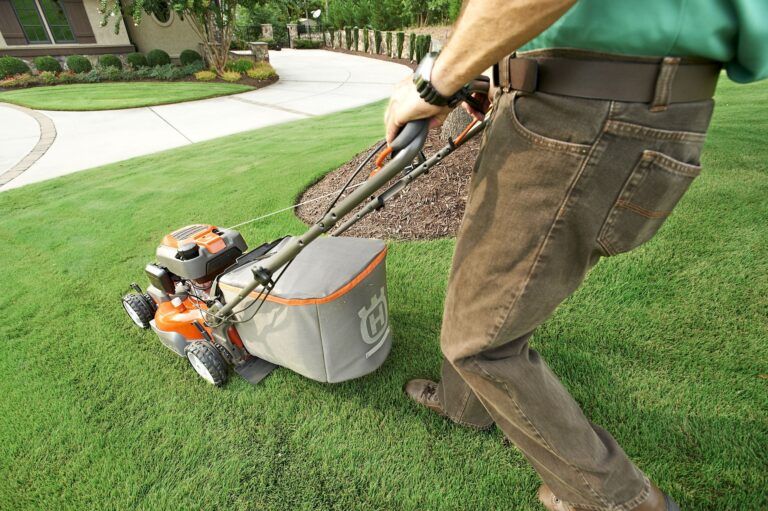
- Mowing and edging: Weekly during growing season, adjusted seasonally
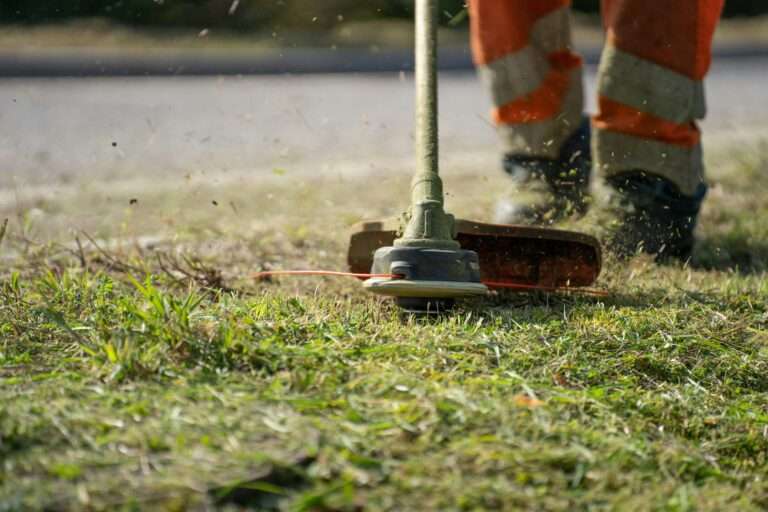
- String trimming: Around obstacles, beds, and hardscapes
- Blowing and cleanup: Walkways, parking lots, and common areas
- Spring and fall cleanup: Leaf removal, debris clearing
- Trash and litter removal: Visible debris in turf and beds
Most contracts also include basic turf health monitoring and reporting issues like disease, pest damage, or irrigation failures. What’s not always included: fertilization, weed control, irrigation maintenance, aeration, and overseeding. These are often separate line items or add-on services.
Mowing at Commercial Scale: Frequency, Equipment, and Standards
Commercial mowing services operate on fixed schedules, typically weekly from April through September in Eastern Washington. Frequency adjusts in spring and fall when growth slows. Height is maintained at 2.5 to 3.5 inches for cool-season grasses like Kentucky bluegrass and tall fescue.
Equipment matters. Wide-deck zero-turn mowers cover acres efficiently. Crews rotate mowing patterns to prevent rutting and compaction. Blades are sharpened regularly to ensure clean cuts that reduce disease risk.
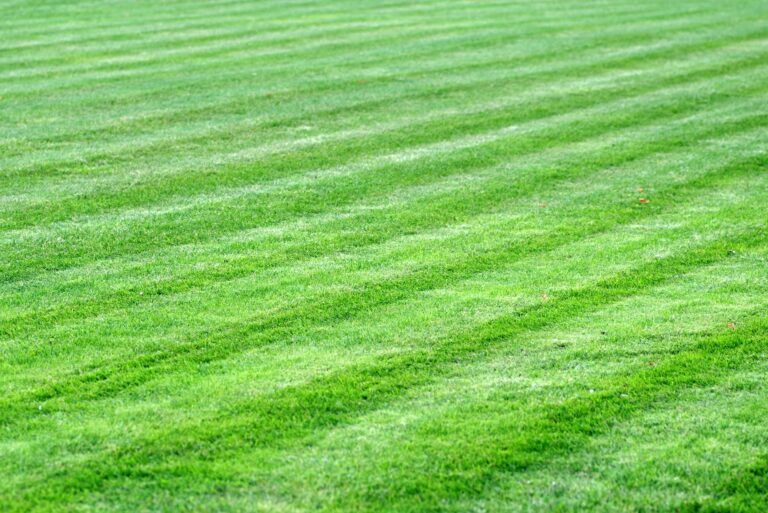
Professional commercial property maintenance services also include striping for aesthetic appeal on high-visibility properties. Mowing schedules are coordinated to avoid peak business hours or weekend events.
Fertilization and Weed Control on Commercial Properties
Commercial fertilization services are typically separate from mowing contracts. A professional program includes four to six applications per year: early spring for green-up, late spring for growth, summer for stress tolerance, and fall for root development and winterization.
Commercial weed control is applied during fertilization visits. Pre-emergent herbicides in early spring prevent crabgrass and annual weeds. Post-emergent treatments target broadleaf weeds like dandelions and clover. Our lawn fertilization and spray services are tailored to Eastern Washington’s semi-arid climate and cool-season turf varieties.
Application records are maintained for regulatory compliance and liability protection. Commercial applicators are licensed and follow state regulations for chemical use near buildings, water features, and public spaces.
Commercial Irrigation Maintenance: Startup, Monitoring, and Winterization
Commercial irrigation maintenance includes three critical service windows. Spring startup in April involves turning on the system, checking for winter damage, adjusting heads, and programming controllers. Mid-season monitoring checks for leaks, broken heads, and coverage issues during regular mowing visits.
Fall winterization in October is non-negotiable in Eastern Washington. Systems must be blown out before freezing temperatures to prevent cracked pipes and valve damage. Missing this window costs thousands in spring repairs.
Some contracts include irrigation monitoring as part of grounds maintenance. Others charge separately for startup, winterization, and repairs. Clarify what’s included before signing. Our commercial irrigation maintenance covers all three service windows with detailed reporting.
Aeration, Dethatching, and Overseeding for Commercial Turf
Commercial lawn aeration is typically performed once or twice annually. Core aeration in fall relieves compaction from foot traffic and vehicles, improves water penetration, and strengthens root systems. High-traffic properties may need spring aeration as well.
Dethatching removes excess organic buildup when thatch exceeds half an inch. This is usually needed every two to three years on commercial properties. Overseeding follows aeration and dethatching to fill thin areas and improve turf density.
These services are rarely included in base mowing contracts. They’re seasonal add-ons billed separately. Budget $100 to $300 per acre for aeration, $150 to $400 per acre for dethatching, and $200 to $500 per acre for overseeding, depending on property size and access.
Seasonal Services: What a Full-Year Commercial Grounds Contract Looks Like in Eastern Washington
A full-year commercial grounds maintenance contract in Eastern Washington includes:
Spring (March-May):
- Irrigation startup and system check
- Spring cleanup and debris removal
- First mowing of the season
- Pre-emergent weed control
- Early fertilization
Summer (June-August):
- Weekly mowing and edging
- Irrigation monitoring and adjustments
- Mid-season fertilization
- Post-emergent weed control
- Pest and disease monitoring
Fall (September-November):
- Reduced mowing frequency
- Fall fertilization and winterization
- Aeration and overseeding
- Leaf removal and fall cleanup
- Irrigation winterization
Winter (December-February):
- Snow removal (if included)
- Debris and storm damage cleanup
- Planning and scheduling for spring
For a detailed breakdown, see our seasonal landscape maintenance checklist for property managers.
How to Evaluate a Commercial Lawn Maintenance Proposal
Review proposals for clarity on scope, frequency, and what’s excluded. Mowing “as needed” is vague and leads to disputes. “Weekly mowing April through September, bi-weekly October and March” is clear.
Check insurance requirements. Commercial policies should include general liability of at least $1 million and workers’ compensation. Ask for certificates of insurance naming your property as an additional insured.
Compare apples to apples. A low-bid proposal that excludes fertilization, irrigation, and seasonal services isn’t cheaper if you have to hire additional vendors. Bundling services with one provider often costs less and simplifies management.
Ask about equipment, crew size, and response time for issues. A two-person crew with residential mowers won’t maintain a five-acre campus efficiently. For more guidance, see our guide to commercial lawn care services.
What a Commercial Maintenance Checklist Should Include (and What to Ask Your Contractor)
A professional commercial landscape maintenance checklist includes:
- Mowing and edging completed to the specified height
- All walkways, parking lots, and common areas are blown clean
- Visible litter and debris removed
- Irrigation system monitored for leaks or malfunctions
- Turf health issues documented and reported
- Entry features and high-visibility areas inspected
Ask your contractor how they document completed work. Photo logs, digital checklists, and regular site reports provide accountability and help track property condition over time.
At Delk Management, we’ve been managing commercial properties across Eastern Washington since 2011. Our commercial landscaping services in Eastern Washington include full grounds maintenance, irrigation, fertilization, and seasonal services tailored to the demands of multi-acre properties.
If you’re evaluating providers or need a second opinion on your current contract, contact us for a site assessment and transparent proposal.